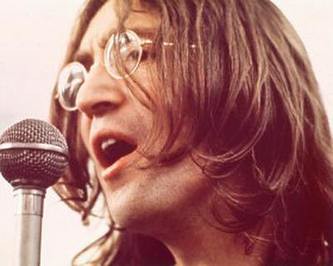
HEARTS, a local singapore band helped me discover ELO & a genius called "Jeff Lynne". I bought ELO's definitive collection a few weeks back and fell in love with them immediately. Balraj (John Lennon of HEARTS) recommended me another wonderful album called "Discovery". Balraj/Clarence/Roger/Francis, Thanks a lot guyz!! You have given me something really great to explore. Thanks to A & D who generously gifted me the "Discovery" audio cd. Thanks guyz!!
I have been listening to this album back 2 back since yesterday and it continues to sound better everytime. "Jeff Lynne" is surely the most underrated GENIUS.
Line up for "Discovery" album:
JEFF LYNNE: Lead vocals, backing vocals, lead and rhythm guitars, piano and synthesizer, strings and choir arrangements
BEV BEVAN: Drums, roto toms, percussion
KELLY GROUCUTT: Bass guitar, vocals, backing vocals
RICHARD TANDY: Grand piano, all synthesizers, electric piano and clavinet, strings and choir arrangements
A few good ones from the album that you might wanna discover :)
Midnight Blue
The Diary of Horace Wimp
Last train to London
Shine A Little Love
Confusion
On The Run
Njoy!!!
Thursday, October 12, 2006


Monday, October 9, 2006
The more I see the less I know for sure
John Lennon's 66th birthday was extra special to me for various reasons:
The UnXpected played many other rocking numbers that nite like:
I will upload some of those videozzz very soon.


I couldn't sleep before I finished reading "Lennon Legend". It's an amazing and must have collection for all John Lennon fans. I used to think that I know quite a lot about John Lennon & The Beatles but have realized lately that "The more I see the less I know for sure"... :)
- I celebrated it in Wala Wala Singapore on 7th Oct 2006 (Saturday night) with "The UnXpected". It surely couldn't have been any better. "The UnXpected" performed Beatles Medley. Find below the video captured in Wala, that will always remind me of the big nite:
The UnXpected played many other rocking numbers that nite like:
- Metallica - Enter Sandman
- Dire Straits - Money For Nothing
- U2 - Vertigo
- Black Sabbath - War Pigs
- The Doors - Roadhouse Blues
I will upload some of those videozzz very soon.
- A & D gifted me following and kept me busy all night on 9th Oct. Thanks guyz! You are the best:
I couldn't sleep before I finished reading "Lennon Legend". It's an amazing and must have collection for all John Lennon fans. I used to think that I know quite a lot about John Lennon & The Beatles but have realized lately that "The more I see the less I know for sure"... :)
Thursday, October 5, 2006
Strawberry Fields Forever
Another Lennon Classic!!
Lennon and McCartney's songs shared a similar theme of nostalgia for their childhood in Liverpool and both referred to actual locations there, but they also had strong surrealistic and psychedelic overtones. Strawberry Field was a Salvation Army orphanage just around the corner from Lennon's boyhood home in Woolton. Lennon and his childhood friends Pete Shotton and Ivan Vaughan used to play in the trees behind the orphanage. One of Lennon's childhood treats was the garden party that took place each summer in the grounds of Strawberry Field. Lennon's Aunt Mimi recalled: "As soon as we could hear the Salvation Army band starting, John would jump up and down shouting, 'Mimi, come on. We're going to be late.'"
The period of its composition was one of momentous change and dislocation for Lennon: The Beatles had just retired from touring after one of the most difficult periods of their career, including the infamous "more popular than Jesus" controversy and their disastrous tour of the Philippines; Lennon's marriage was failing; perhaps most significant of all, he was using increasing quantities of drugs, especially the powerful hallucinogen LSD. Although there are no obvious references to drugs, the song's style and tone and oblique, stream of consciousness lyrics often are thought to have been influenced by his LSD experiences.
Quotes
Lyrics
Let me take you down, 'cause I'm going to Strawberry Fields.
Nothing is real and nothing to get hung about.
Strawberry Fields forever.
Living is easy with eyes closed, misunderstanding all you see.
It's getting hard to be someone but it all works out.
It doesn't matter much to me.
Let me take you down, 'cause I'm going to Strawberry Fields.
Nothing is real and nothing to get hung about.
Strawberry Fields forever.
No one I think is in my tree, I mean it must be high or low.
That is you can't you know tune in but it's all right.
That is I think it's not too bad.
Let me take you down, 'cause I'm going to Strawberry Fields.
Nothing is real and nothing to get hung about.
Strawberry Fields forever.
Always know sometimes think it's me, but you know I know when it's a dream.
I think a "No" will mean a "Yes," but it's all wrong.
That is I think I disagree.
Let me take you down, 'cause I'm going to Strawberry Fields.
Nothing is real and nothing to get hung about.
Strawberry Fields forever.
Strawberry Fields forever.
Strawberry Fields forever.
(music fades out and slowly come back on. In the background, John Lennon says "Cranberry Sauce." Some believe that he says "I buried Paul." :) )
Lennon and McCartney's songs shared a similar theme of nostalgia for their childhood in Liverpool and both referred to actual locations there, but they also had strong surrealistic and psychedelic overtones. Strawberry Field was a Salvation Army orphanage just around the corner from Lennon's boyhood home in Woolton. Lennon and his childhood friends Pete Shotton and Ivan Vaughan used to play in the trees behind the orphanage. One of Lennon's childhood treats was the garden party that took place each summer in the grounds of Strawberry Field. Lennon's Aunt Mimi recalled: "As soon as we could hear the Salvation Army band starting, John would jump up and down shouting, 'Mimi, come on. We're going to be late.'"
The period of its composition was one of momentous change and dislocation for Lennon: The Beatles had just retired from touring after one of the most difficult periods of their career, including the infamous "more popular than Jesus" controversy and their disastrous tour of the Philippines; Lennon's marriage was failing; perhaps most significant of all, he was using increasing quantities of drugs, especially the powerful hallucinogen LSD. Although there are no obvious references to drugs, the song's style and tone and oblique, stream of consciousness lyrics often are thought to have been influenced by his LSD experiences.
Quotes
- "Strawberry Fields is a real place. After I stopped living at Penny Lane, I moved in with my auntie who lived in the suburbs in a nice semidetached place with a small garden and doctors and lawyers and that ilk living around - - not the poor slummy kind of image that was projected in all the Beatles stories. In the class system, it was about half a class higher than Paul, George and Ringo, who lived in government-subsidized housing. We owned our house and had a garden. They didn't have anything like that. Near that home was Strawberry Fields, a house near a boys' reformatory where I used to go to garden parties as a kid with my friends Nigel and Pete. We would go there and hang out and sell lemonade bottles for a penny. We always had fun at Strawberry Fields. So that's where I got the name. But I used it as an image. Strawberry Fields forever. [Singing] "(Living is easy) With eyes closed. Misunderstanding all you see." It still goes, doesn't it? Aren't I saying exactly the same thing now? The awareness apparently trying to be expressed is -- let's say in one way I was always hip. I was hip in kindergarten. I was different from the others. I was different all my life. The second verse goes, "No one I think is in my tree." Well, I was too shy and self-doubting. Nobody seems to be as hip as me is what I was saying. Therefore, I must be crazy or a genius -- "I mean it must be high or low," the next line. There was something wrong with me, I thought, because I seemed to see things other people didn't see. I thought I was crazy or an egomaniac for claiming to see things other people didn't see. As a child, I would say, "But this is going on!" and everybody would look at me as if I was crazy. I always was so psychic or intuitive or poetic or whatever you want to call it, that I was always seeing things in a hallucinatory way. It was scary as a child, because there was nobody to relate to. Neither my auntie nor my friends nor anybody could ever see what I did. It was very, very scary and the only contact I had was reading about an Oscar Wilde or a Dylan Thomas or a Vincent van Gogh -- all those books that my auntie had that talked about their suffering because of their visions. Because of what they saw, they were tortured by society for trying to express what they were. I saw loneliness." - John Lennon, Playboy, 1980
- "The reason that Strawberry Fields and Penny Lane didn't appear on the album [Sgt. Peppers] is that Brian Epstein, their manager, was worried. He said to me, 'The boys need a lift - they need a great sequel and what have you got.' Well, I said, 'We've got two wonderful songs - let's issue them both.' In those days we didn't include single releases in albums as we thought we were conning the public. One of the biggest errors I ever made." - George Martin on why the song was not included on 'Sgt. Pepper's Lonely Hearts Club Band'
Lyrics
Let me take you down, 'cause I'm going to Strawberry Fields.
Nothing is real and nothing to get hung about.
Strawberry Fields forever.
Living is easy with eyes closed, misunderstanding all you see.
It's getting hard to be someone but it all works out.
It doesn't matter much to me.
Let me take you down, 'cause I'm going to Strawberry Fields.
Nothing is real and nothing to get hung about.
Strawberry Fields forever.
No one I think is in my tree, I mean it must be high or low.
That is you can't you know tune in but it's all right.
That is I think it's not too bad.
Let me take you down, 'cause I'm going to Strawberry Fields.
Nothing is real and nothing to get hung about.
Strawberry Fields forever.
Always know sometimes think it's me, but you know I know when it's a dream.
I think a "No" will mean a "Yes," but it's all wrong.
That is I think I disagree.
Let me take you down, 'cause I'm going to Strawberry Fields.
Nothing is real and nothing to get hung about.
Strawberry Fields forever.
Strawberry Fields forever.
Strawberry Fields forever.
(music fades out and slowly come back on. In the background, John Lennon says "Cranberry Sauce." Some believe that he says "I buried Paul." :) )
More Popular Than Jesus Controversy
Lennon often spoke his mind freely and the press was used to querying him on a wide range of subjects. On 4 March 1966 in an interview for the London Evening Standard with Maureen Cleave, who was a friend, Lennon made an off-the-cuff remark regarding religion.
A firestorm of protest swelled from the southern U.S. Bible Belt area, as conservative groups publicly burned Beatles records and memorabilia. The Beatles looked at this in a wry way, by saying, "They've got to buy them first before they burn 'em."
Radio stations banned Beatles music and concert venues cancelled performances. Even the Vatican got involved with a public denunciation of Lennon's comments. On August 11, 1966, The Beatles held a press conference in Chicago, in order to address the growing furor.
- "Christianity will go. It will vanish and shrink. ... I don't know what will go first, rock 'n' roll or Christianity. We're more popular than Jesus now. Jesus was all right but his disciples were thick and ordinary. It's them twisting it that ruins it for me."
A firestorm of protest swelled from the southern U.S. Bible Belt area, as conservative groups publicly burned Beatles records and memorabilia. The Beatles looked at this in a wry way, by saying, "They've got to buy them first before they burn 'em."
Radio stations banned Beatles music and concert venues cancelled performances. Even the Vatican got involved with a public denunciation of Lennon's comments. On August 11, 1966, The Beatles held a press conference in Chicago, in order to address the growing furor.
- Lennon: "I suppose if I had said television was more popular than Jesus, I would have got away with it, but I just happened to be talking to a journalist friend (Maureen Cleave), and I used the words "Beatles" as a remote thing, not as what I think — as Beatles, as those other Beatles like other people see us. I just said "they" are having more influence on kids and things than anything else, including Jesus. But I said it in that way which is the wrong way."
- Lennon: "Well, originally I pointed out that fact in reference to England. That we meant more to kids than Jesus did, or religion at that time. I wasn't knocking it or putting it down. I was just saying it as a fact and it's true more for England than here. I'm not saying that we're better or greater, or comparing us with Jesus Christ as a person or God as a thing or whatever it is. I just said what I said and it was wrong. Or it was taken wrong. And now it's all this."
- Lennon: "I wasn't saying whatever they're saying I was saying. I'm sorry I said it really. I never meant it to be a lousy anti-religious thing. I apologise if that will make you happy. I still don't know quite what I've done. I've tried to tell you what I did do but if you want me to apologise, if that will make you happy, then OK, I'm sorry."
Monday, October 2, 2006
Queen - Bohemian Rhapsody
One of the greatest songs made ever. The song has pretty interesting structure.
Song structure
The song is nearly six minutes in length and is composed of six distinct sections - introduction, ballad, guitar solo, opera, rock, and an outro.
Introduction (0:00-0:48 )
The song begins with close four-part harmony a cappella introduction in B-flat, which is entirely multitrack recordings of Mercury. The lyrics question whether life is "real" or "just fantasy" before concluding that there can be "no escape from reality." After 15 seconds, the grand piano enters, and Mercury's solo voice alternates with the chorus. The narrator introduces himself as "just a poor boy" but declares that he "need[s] no sympathy" because nothing matters: chromatic side-slipping on "easy come, easy go" highlight the dream-like atmosphere. The end of this section is marked by the bass entrance and the familiar cross-handed piano vamp in B-flat.
Ballad (0:48-2:36)
The grand piano continues the 2-bar vamp in B-flat. Deacon's bass guitar enters playing the first note, and the vocals change from harmony to an impassioned solo performance by Mercury. The narrator explains that he has "just killed a man," and with that act thrown his life away. The chromatic bass line at the end of brings about a modulation to E-flat. Here Taylor's drums enter (1:19), and the narrator makes the first of several invocations to his "mama" in the new key, reusing the original theme. The narrator explains his regret over "mak[ing] you cry" and urging mama to "carry on" as if "nothing really matters." A truncated phrase connects to a repeat of the vamp in B-flat. As the ballad proceeds into its second verse, the narrator shows how tired and beat down he is by his actions (as May enters on guitar and mimics the upper range of the piano 1:50). May sends "shivers down my spine" by scratching the strings on the other side of the bridge. The narrator bids the world goodbye and prepares to "face the truth" admitting "I don't want to die / I sometimes wish I'd never been born at all." Another chromatic bass descent brings a modulation to the key of A, and the "Opera" section.
Guitar solo (2:36-3:02)
As Mercury sings the rising line "I sometimes wish I'd never been born at all," the band builds in intensity, leading up to the song's first highlight: a guitar solo by May that serves as the segue from ballad to opera. May's solo continues to build intensity, but, once the bass line completes its descent establishing the new key, the entire band cuts out abruptly at 3:02 except for quiet quaver chords on the piano: the "opera" has begun. In live performances, the stage would go dark and all the members of the band would walk offstage and allow the entire opera section to play from the recording.
Opera (3:02-4:07)
A rapid series of rhythmic and harmonic changes (E flat major to F minor to A major, among others) introduces a pseudo-operatic midsection, which contains the bulk of the elaborate vocal multitracking, depicting the narrator's "descent into hell". While the underlying pulse of the song is maintained, the dynamics vary greatly from bar to bar, from a single Mercury voice and solo piano, to a multi-voice choir. The choir effect was created by having May, Mercury, and Taylor sing their vocal parts continually for ten to twelve hours a day, resulting in 180 separate overdubs.[2] The band used the bell effect for lyrics "Magnifico" and "Let me go". Also, on "Let him go", Taylor singing the top section carries his note on further after the rest of the "choir" have stopped singing. Lyrical references in this passage include Scaramouche, the fandango, Galileo, Figaro, "Bismillah," and Beelzebub, as rival factions fight over the narrator's soul. The introduction is recalled with the chromatic inflection on "I'm just a poor boy...easy come, easy go." The section concludes with a full choral treatment of the lyric, "Beelzebub has a devil put aside for me."
Hard rock (4:07-4:55)
The operatic section leads (with the voices singing "for me" on a block B-flat major chord, topped by a sustained high B-flat falsetto from Taylor) into an aggressive hard rock musical interlude with a guitar riff that was written by Mercury. During group singalongs (including the famous scene in the film Wayne's World), it is traditional to headbang during this passage. At 4:14, a double-tracked Mercury sings angry lyrics addressed to an unspecified "you," accusing him/her of betrayal and abuse and insisting "can't do this to me, baby." There follows three ascending guitar runs, which May described as something he had to "battle with" when performing the song live. The third guitar run is then imitated by Mercury on the piano.
Outro (4:55-5:55)
After Mercury plays ascending octaves of notes from the Bb mixolydian scale, the song then returns to the tempo and form of the introduction. A guitar accompanies the chorus' "ooh yeah, ooh yeah", to give the effect of trumpets. This effect was achieved by playing the guitar through an amp designed by Deacon, affectionately nicknamed the "Deacy Amp". The song progressively becomes quieter while Mercury again sings "nothing really matters to me..." The final line, "any way the wind blows," is followed by the barely audible sound of a gong.
Lyrics
Is this the real life-
Is this just fantasy-
Caught in a landslide-
No escape from reality-
Open your eyes
Look up to the skies and see-
Im just a poor boy,i need no sympathy-
Because Im easy come,easy go,
A little high,little low,
Anyway the wind blows,doesnt really matter to me,
To me
Mama,just killed a man,
Put a gun against his head,
Pulled my trigger,now hes dead,
Mama,life had just begun,
But now Ive gone and thrown it all away-
Mama ooo,
Didnt mean to make you cry-
If Im not back again this time tomorrow-
Carry on,carry on,as if nothing really matters-
Too late,my time has come,
Sends shivers down my spine-
Bodys aching all the time,
Goodbye everybody-Ive got to go-
Gotta leave you all behind and face the truth-
Mama ooo-
I dont want to die,
I sometimes wish Id never been born at all-
I see a little silhouetto of a man,
Scaramouche,scaramouche will you do the fandango-
Thunderbolt and lightning-very very frightening me-
Galileo,galileo,
Galileo galileo
Galileo figaro-magnifico-
But Im just a poor boy and nobody loves me-
Hes just a poor boy from a poor family-
Spare him his life from this monstrosity-
Easy come easy go-,will you let me go-
Bismillah! no-,we will not let you go-let him go-
Bismillah! we will not let you go-let him go
Bismillah! we will not let you go-let me go
Will not let you go-let me go
Will not let you go let me go
No,no,no,no,no,no,no-
Mama mia,mama mia,mama mia let me go-
Beelzebub has a devil put aside for me,for me,for me-
So you think you can stop me and spit in my eye-
So you think you can stop me and leave me to die-
Oh baby-cant do this to me baby-
Just gotta get out-just gotta get right outta here-
Nothing really matters,
Anyone can see,
Nothing really matters-,nothing really matters to me
Saturday, September 30, 2006
Abbey Road - Beatles comments on each of the songs
COME TOGETHER
(Lennon/McCartney)
JOHN 1969: "'Come Together' changed at the session. We said, 'Let's slow it down. Let's do this to it, let's do that to it,' and it ends up however it comes out. I just said, 'Look, I've got no arrangement for you, but you know how I want it.' I think that's partly because we've played together a long time. So I said, 'Give me something funky and set up a beat, maybe.' And they all just joined in."
PAUL 1969: "On the new album I like 'Come Together,' which is a great one of John's."
JOHN 1980: "'Come Together' is me-- writing obscurely around an old Chuck Berry thing. I left the line 'Here comes old flat-top.' It is nothing like the Chuck Berry song, but they took me to court because I admitted the influence once years ago. I could have changed it to 'Here comes old iron face,' but the song remains independent of Chuck Berry or anybody else on earth. The thing was created in the studio. It's gobbledygook-- 'Come Together' was an expression that Tim Leary had come up with for his attempt at being president or whatever he wanted to be, and he asked me to write a campaign song. I tried and I tried, but I couldn't come up with one. But I came up with this, 'Come Together,' which would've been no good to him-- you couldn't have a campaign song like that, right? Leary attacked me years later, saying I ripped him off. I didn't rip him off. It's just that it turned into 'Come Together.' What am I going to do, give it to him? It was a funky record-- it's one of my favorite Beatle tracks, or, one of my favorite Lennon tracks, let's say that. It's funky, it's bluesy, and I'm singing it pretty well. I like the sound of the record. You can dance to it. I'll buy it!" (laughs)
SOMETHING
(Harrison)
JOHN 1969: "I think that's about the best track on the album, actually."
PAUL 1969: "I like George's song 'Something.' For me I think it's the best he's written."
GEORGE 1969: "I wrote the song 'Something' for the album before this one, but I never finished it off until just recently. I usually get the first few lines of words and music together, both at once... and then finish the rest of the melody. Then I have to write the words. It's like another song I wrote when we were in India. I wrote the whole first verse and just said everything I wanted to say, and so now I need to write a couple more verses. I find that much more difficult. But John gave me a handy tip. He said, 'Once you start to write a song, try to finish it straight away while you're still in the same mood.' Sometimes you go back to it and you're in a whole different state of mind. So now, I do try to finish them straight away."
GEORGE 1980: "'Something' was written on the piano while we were making the White Album. I had a break while Paul was doing some overdubbing so I went into an empty studio and began to write. That's really all there is to it, except the middle took some time to sort out. It didn't go on the White Album because we'd already finished all the tracks."
MAXWELL'S SILVER HAMMER
(Lennon/McCartney)
JOHN 1969: "He (Paul) did quite alot of work on it. I was ill after the (automobile) accident while they did most of the track, and I believe he really ground George and RIngo into the ground recording it. We spent more money on that song than any of them on the whole album, I think."
GEORGE 1969: "The song 'Maxwell's Silver Hammer' is one of Paul's which we've been trying to record for ages. It's one of those instant whistle-along tunes which some people hate, and other people really like. It's a fun song, but it's kinda sick because Maxwell keeps on killing everyone."
PAUL circa-1994: "'Maxwell's Silver Hammer' is my analogy for when something goes wrong out of the blue, as it so often does, as I was beginning to find out at that time in my life. I wanted something symbolic of that, so to me it was some fictitious character called Maxwell with a silver hammer. I don't know why it was silver, it just sounded better than Maxwell's hammer. It was needed for scanning. We still use that expression now when something unexpected happens."
OH! DARLING
(Lennon/McCartney)
JOHN 1980: "'Oh! Darling' was a great one of Paul's that he didn't sing too well. I always thought that I could've done it better-- it was more my style than his. He wrote it, so what the hell, he's going to sing it. If he'd had any sense he should have let me sing it." (laughs)
PAUL circa-1994: "I mainly remember wanting to get the vocal right, wanting to get it good, and I ended up trying each morning as I came into the recording session. I tried it with a hand mike, and I tried it with a standing mike, I tried it every which way, and finally got the vocal I was reasonably happy with. It's a bit of a belter and if it comes off lukewarm then you've missed the whole point. It was unusual for me-- I would normally try all the goes at a vocal in one day."
OCTOPUS'S GARDEN
(Starkey)
GEORGE 1969: "'Octopus's Garden' is Ringo's song. It's only the second song Ringo has ever written, mind you, and it's lovely. Ringo gets bored with just playing drums all the time, so at home he sometimes plays a bit of piano, but unfortunately he only knows about three chords. He knows about the same on guitar too. This song gets very deep into your consciousness, though because it's so peaceful. I suppose Ringo is writing cosmic songs these days without even realizing it."
RINGO 1981: "He (a ship captain) told me all about octopuses-- how they go 'round the sea bed and pick up stones and shiny objects and build gardens. I thought, 'How fabulous!' because at the time I just wanted to be under the sea, too. I wanted to get out of it for a while."
I WANT YOU (SHE'S SO HEAVY)
(Lennon/McCartney)
GEORGE 1969: "It is very heavy. John plays lead guitar and sings, and it's basically just an old blues riff he's doing, but again, it's a very original John-type song as well... It's a very good chord sequence he used on this particular one."
JOHN 1969: "We used a Moog synthesizer on the end. That machine can do all sounds and all ranges of sound."
JOHN 1971: "Simplicity is evident in 'She So Heavy.' In fact a reviewer wrote: 'He seems to have lost his talent for lyrics, it's so simple and boring.' When it gets down to it-- when you're drowning, you don't say 'I would be incredibly pleased if someone would have the foresight to notice me drowning and come and help me,' you just scream."
JOHN 1980: "That's me, about Yoko."
HERE COMES THE SUN
(Harrison)
GEORGE 1980: "...written at a time when Apple was getting like school, where we had to go and be businessmen-- all this signing accounts, and 'sign this' and 'sign that.' Anyway, it seems as if winter in England goes on forever; by the time spring comes you really deserve it. So one day I decided, 'I'm going to sag-off Apple,' and I went over to Eric Clapton's house. I was walking in his garden. The relief of not having to go and see all those dopey accountants was wonderful. And I was walking around the garden with one of Eric's acoustic guitars, and wrote 'Here Comes The Sun.'"
BECAUSE
(Lennon/McCartney)
PAUL 1969: "I like John's 'Because' on the second side. To say, 'Because the world is round it turns me on' is great. And 'Because the wind is high it blows my mind'"
GEORGE 1969: "I think my favorite one on the album is 'Because.' The lyrics are uncomplicated... but the harmony was actually pretty difficult to sing. I think it's one of those tunes that will definitely impress most people."
JOHN 1980: "I was lying on the sofa in our house, listening to Yoko play Beethoven's 'Moonlight Sonata' on the piano. Suddenly, I said, 'Can you play those chords backward?' She did, and I wrote 'Because' around them. The song sounds like 'Moonlight Sonata,' too. The lyrics are clear, no bullshit, no imagery, no obscure references."
YOU NEVER GIVE ME YOUR MONEY
(Lennon/McCartney)
GEORGE 1969: "It does two verses of one tune, and then the bridge is almost like a different song altogether, so it's quite melodic."
PAUL 1988: "We wanted to dabble, and I had a bit of fun making some of the songs fit together, with key changes (into the long medley). That was nice. It worked out well."
SUN KING
(Lennon/McCartney)
JOHN 1969: "We just started joking, you know, singing `quando para mucho.´ So we just made up... Paul knew a few Spanish words from school, you know. So we just strung any Spanish words that sounded vaguely like something. And of course we got `chicka ferdy´ in. That´s a Liverpool expression. Just like sort of-- it doesn´t mean anything to me but (childish taunting) `na-na, na-na-na!´ `Cake and eat it´ is another nice line too, because they have that in Spanish-- 'Que' or something can eat it. One we missed-- we could have had 'para noya,' but we forgot all about it."
JOHN 1980: "That's a piece of garbage I had around."
GEORGE 1987: "At the time, 'Albatross' (by Fleetwood Mac) was out, with all the reverb on guitar. So we said, 'Let's be Fleetwood Mac doing Albatross, just to get going.' It never really sounded like Fleetwood Mac... but that was the point of origin."
MEAN MR. MUSTARD
(Lennon/McCartney)
JOHN 1980: "I'd read somewhere in the newspaper about this mean guy who hid his five-pound notes, not up his nose but 'somewhere else.' No, it had nothing to do with cocaine."
PAUL circa-1994: "'Mean Mr Mustard' was very John. I liked that. A nice quirky song."
POLYTHENE PAM
(Lennon/McCartney)
JOHN 1980: "That was me, remembering a little event with a woman in Jersey, and a man who was England's answer to Allen Ginsberg, who gave us our first exposure... I met him when we were on tour and he took me back to his apartment, and I had a girl and he had one he wanted me to meet. He said she dressed up in polythene, which she did. She didn't wear jackboots, and kilts, I just sort of elaborated. Perverted sex in a polythene bag-- Just looking for something to write about."
SHE CAME IN THROUGH THE BATHROOM WINDOW
(Lennon/McCartney)
GEORGE 1969: "A very strange song of Paul's with terrific lyrics, but it's hard to explain what they're all about."
JOHN 1980: "He wrote that when we were in New York announcing Apple and we first met Linda. Maybe she's the one that came in the window."
GOLDEN SLUMBERS
(Lennon/McCartney)
GEORGE 1969: "Another very melodic tune of Paul's which is also quite nice."
JOHN 1969: "It was up to Paul where he went with violins and what he did with them, and I think he wanted a stright kind of backing-- nothing freaky."
PAUL 1969: "I was just playing the piano in Liverpool at my dad's house, and my sister Ruth's piano book... she was learning piano... and 'Golden Slumbers and your old favorites' was up on the stand, you know-- it was a little book with all those words in it. I was just flipping through it and I came to 'Golden Slumbers.' I can't read music so I didn't know the tune... I can't remember the old tune... so I just started playing 'my' tune to it. And then, I liked the words so I just kept that, you know, and then it fitted with another bit of song I had-- which is the verse in between it. So I just made that into a song. It just happened 'cuz I was reading her book."
CARRY THAT WEIGHT
(Lennon/McCartney)
JOHN 1980: "That's Paul. Apparently he was under strain at that period."
PAUL circa-1994: "I'm generally quite upbeat, but at certain times things get to me so much that I just can't be upbeat anymore and that was one of those times. 'Carry that weight a long time'-- like forever! That's what I meant... in this heaviness there was no place to be. It was serious, paranoid heaviness and it was just very uncomfortable."
THE END
(Lennon/McCartney)
JOHN 1980: "That's Paul again, the unfinished song, right? Just a piece at the end. He had a line in it, (sings) 'And in the end the love you take is equal to the love you make,' which is a very cosmic, philosophical line-- which again proves that if he wants to, he can think."
PAUL 1988: "Ringo would never do drum solos. He hated drummers who did lengthy drum solos. We all did. And when he joined the Beatles we said, 'Ah, what about drum solos then?' and he said, 'I hate 'em!' We said, 'Great! We love you!' And so he would never do them. But because of this medley I said, 'Well, a token solo?' and he really dug his heels in and didn't want to do it. But after a little bit of gentle persuasion I said, '...it wouldn't be Buddy Rich gone mad,' because I think that's what he didn't want to do. ... anyway we came to this compromise, it was a kind of a solo. I don't think he's done one since."
PAUL 1994: "We were looking for the end to an album, and 'In the end the love you take is equal to the love you make' just came into my head. I just recognized that would be a good end to an album. And it's a good little thing to say-- now and for all time, I think. I can't think of anything much better as a philosophy, because all you need IS love. It still is what you need. There aint nothin' better. So, you know, I'm very proud to be in the band that did that song, and that thought those thoughts, and encouraged other people to think them to help them get through little problems here and there. So uhh... We done good!!"
HER MAJESTY
(Lennon/McCartney)
PAUL 1969: "That was just... I don't know. I was in Scotland, and I was just writing this little tune. I can never tell, like, how tunes come out. I just wrote it as a joke."
THE BALLAD OF JOHN AND YOKO
(Lennon/McCartney)
JOHN 1980: "Well, guess who wrote that? I wrote that in Paris on our honeymoon. It's a piece of journalism. It's a folk song. That's why I called it, 'The Ballad Of...'"
PAUL 1988: "John came to me and said, 'I've got this song about our wedding and it's called The Ballad Of John And Yoko, Christ They're Gonna Crucify Me, and I said 'Jesus Christ, you're kidding aren't you? Someone really is going to get upset about it.' He said, 'Yeah, but let's do it.' I was a little worried for him because of the lyric but he was going through alot of terrible things. He came around to my house, wanting to do it really quick. He said, 'Let's just you and me run over to the studio.' I said 'Oh alright, I'll play drums, I'll play bass.' John played guitar. So we did it and stood back to see if the other guys would hate us for it-- which I'm not sure about. They probably never forgave us. John was on heat, so to speak. He needed to record it so we just ran in and did it."
OLD BROWN SHOE
(Harrison)
GEORGE 1980: "I started the chord sequences on the piano, which I don't really play, and then began writing ideas for the words from various opposites... Again, it's the duality of things-- yes no, up down, left right, right wrong, etcetera."
REGARDING 'THE MEDLEY' ON ABBEY ROAD
JOHN 1969: "We always have tons of bits and pieces lying around. I've got stuff I wrote around Pepper, because you lose interest after you've had it for years. It was a good way of getting rid of bits of songs. In fact, George and Ringo wrote bits of it... literally in between bits and breaks. Paul would say, 'We've got twelve bars here-- fill it in,' and we'd fill it in on the spot. As far as we're concerned, this album is more 'Beatley' than the double (White) album."
RINGO 1976: "The second side of Abbey Road is my favorite. I love it. 'She Came In Through The Bathroom Window,' and all those bits that weren't songs, I mean, they were just all the bits that John and Paul had around that we roped together."
ON THE ALBUM COVER & 'PAUL IS DEAD' CLUES
PAUL 1974: "I had just turned up at a photo session, and it was a hot day in London, a really nice hot day... and I think I wore sandals. I only had to walk around the corner to the crossing because I lived pretty nearby. And for the photo session I thought, 'I´ll take my sandals off.' You know, so what? Barefoot, nice warm day-- I didn't feel like wearing shoes. So I went around to the photo session and showed me bare feet. Of course, when that comes out and people start looking at it they say, 'Why has he got no shoes on? He´s never done that before.' Okay, you´ve never seen me do it before, but in actual fact it´s just me with my shoes off. Turns out to be some old Mafia sign of death or something."
ON BRAINSTORMING FOR ALBUM TITLES
RINGO 1969: "We went through weeks of all saying, 'Why don't we call it Billy's Left Boot,' and things like that. And then Paul just said, 'Why don't we call it Abbey Road?'"
PAUL 1988: "You see, when you're thinking of album titles, alot of loose talk goes around. It's what American film people or advertising people call 'Off the top of my head.' You have alot of thoughts that are going to be rejected. We were stuck for an album title and the album didn't appear to have any obvious concept, except that it had all been done in the studio and it had been done by us. And (studio engineer) Geoff Emerick used to have these packets of Everest cigarettes always sitting by him, and we thought, 'That's good (Everest), it's big and it's expansive.' ...but we didn't really like it in the end. We said, 'Nah, come on! You can't name an album after a ciggie packet!'"
Come Together
The UnXpected played this song yesterday evening in Wala. This is another amazing song from the album "Abbey Road" - My favourite Beatles album.

Little bit about this song from Wikipedia:
Origin
The song's history began with Lennon writing a song for Timothy Leary's failed gubernatorial campaign in California against Ronald Reagan, one which promptly ended when Leary was arrested for possession of marijuana. It was transformed by Lennon into a track with digs at McCartney and Harrison interspersed alongside tales of his Bagism movement with wife Yoko Ono. It was the subject of a lawsuit brought against Lennon by Chuck Berry's music publisher, Morris Levy, due to the fact that one line in "Come Together" closely resembled a line of Berry's You Can't Catch Me: (i.e. The Beatles' "Here come ol' flattop, he come groovin' up slowly" vs. Berry's "Here come up flattop, he was groovin' up with me"). After settling out of court, Lennon promised to record other songs owned by Levy, all of which were released on Lennon's 1975 album Rock 'n' Roll. Perhaps the song refers to the late eccentric billionaire Howard Hughes. Lines such as "hair down to his knees" and "shoot coca-cola" parallel the billionaire's behavior at the time this song was written. The line "Got to be good lookin cause he's so hard to see" could refer to the billionaire's reclusivity. Another, possibly apocryphal story is that John Lennon grew frustrated at the tendency of music critics to read heavily into and interpret his lyrics, and wrote nonsensical lyrics simply to spite them.
Lennon played rhythm guitar in addition to singing the vocal. Each exclamation of 'shoot' one hears during the opening bass line is actually 'shoot me', although 'shoot' is immediately followed by a handclap which drowns out the word 'me'. McCartney played bass and the electric piano (estimated as "southern" by John), Harrison lead guitar, and Ringo Starr drums and maracas. It was produced by George Martin and recorded at the end of July 1969 at Abbey Road Studios.
Subscribe to:
Posts (Atom)